Wititj - Rainbow serpent (Olive-green python, NE Arnhem land)
“Passing a story from one person to the next plays an important part in keeping the Yolgnu culture alive."
- Wititj -
People of NE Arnhem land tell about the Rainbow serpent Wititj who came from the water to create the earth...

>>> Djalu Gurruwiwi www.djalu.com >>> Yirdaki (Wikipedia)
please listen to:Djalu Heals the World...Working Papers: : Letter from Australia, part 2, February 2009<<<
|
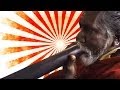
"Djalu Gurruwiwi is a senior member of the Galpu clan and an internationally renowned yidaki maker and player.
Djalu's expertise is an extension of the role handed down to him by his now deceased father, Monyu, a noted Yolngu leader in his time. Monyu instilled in his son the importance of culture and gave Djalu the responsibility of looking after the yidaki for the Galpu clan. This duty is all the more important when considering the fact that many clan groups throughout Arnhem Land look to the Galpu as one of the primary custodians of the instrument. And linked to the yidaki (didgeridoo) are many aspects of knowledge and cultural practice that are sacred, their hidden secrets religiously guarded by those in authority." |
'...Djalu asserts the authority of the Galpu Nation under the protection of sacred Lightning, its spiritual totem... Djalu after all is Wititj (the sacred Olive Python) ... Whereas Djalu is Wititj the Olive Python, his father Monyu was Lightning itself. A warrior of virtually unmatched prowess, Monyu and his sons kept the law as protectors of it and as executioner of perpetrators of crime. This was an honour, as guardians of the law and as respected, perhaps feared, lawmen. But there is a new way now that Djalu has discovered, an acceptance of new knowledge and the continued adherence to the old laws of duality and balance creating oneness...' from; www.youtube.com/watch?v=9p1UsVvhLqE 
Rripangu Yidaki - Djalu Gurruwiwi Yidaki Masterclasses<<< "In a world that is experiencing dramatic social change, Yolngu must be able to remember who they are and to maintain their culture. By developing Rripangu Yidaki our children will be able to be involved in the enterprise by learning from the old people.When we are gone, our children will carry on our memories and keep our culture alive."
from: http://www.isx.org.au/projects/1234312854_21339.html
"Standing Up Alive" Mens Gathering 2001
Two Senior Elders are coming ~ Djalu and Alfred Guruwiwi. Djalu is the principal custodian of the Yidaki (didjeridu) Dreaming and world famous maker and painter of Yidaki’s.
Alfred is a Songman, master of percussion rhythms and holder of the Bilma Dreaming. Bilma are the clapsticks that accompany ceremony. It is extraordinary to have these masters sharing their knowledge outside Arnhem Land. With the 7 younger men as dancers and musicians, all the elements of ceremony ~ Yidaki, Bilma, Song and Dance will be embodied. Permission has also been given by other Senior custodians to share aspects of the deep teachings of Maraian ~ which means Sacred, Powerful or Spiritual.
In this teaching the power being, Lumahlumah follows his Dreaming track making features in the land and naming natural species. At the time of his passing he sings his heart teaching & reveals the symbols and ceremony of Maraian.
“I give you life, you and all the birds and animals. You are all one, depending on each other. Keep this Law and look after each other.”
This gathering is an exploration of ancient paths from fear to compassion.
from:http://www.heartdidg.com/Info/sua.htm#The+Standing+Up+Alive _________________________________________
Bogong Moth Dreaming
Video's voor Gurruwiwi Family, Forlimpopoli 2009, Italy
****************************************** **********************************************
YouTube - Djalu Gurruwiwi Performs Manikay at the British Museum ... 2009 2009年10月7日 ...
Following Djalu's very successful UK yidaki workshops, he was invited to perform Manikay at the British Museum in London, along with Dhopiya ...
******************************************
| 'Arnhem Land Artist Djalu Gurruwiwi was born on Wirriku, one of the smaller of the Wessel Islands, a group of islands off the coast of Arnhem Land in the Northern Territory. He often paints his country, Garrimala, which is the place where all his ancestors came from before spreading around the place. He also paints the Wessel Islands, country that is good for hunting turtle, as well as the deeper water that holds sacred and secret knowledge for the Galpu clan. He depicts the water as parallel curves of minyinti -sacred cross hatched design: "In the sea country there are many ritual ceremonies, they teach us who the country belongs to." Djalu is known amongst yirdaki (didgeridoo) makers and players as the true master of the trade...' from: http://www.aboriginalartprints.com.au/indigenous_artists_details.php?artist_id=43-Djalu%20Gurruwiwi
Galmak the home of Wititj, the olive python Galmak is not a specific place name, but can refer to any home of any “Wititj”, for instance the house of a Galpu person or the womb of a Galpu woman.
from:www.yirrkala.com/yidaki/dhawu/Djalu'wu_Dhawu.pdf
from: http://www.youtube.com/watch?
The olive green python of Northern Australia (liasis olivaceus) is a large constricting snake that can potentially grow to over 4 meters long The python is one of Australia's largest snakes. liasis olivaceus can live to be about 20 years old.
WITITJ LAW (ROM) told by Wititj John Allan
"Wititj, that Rainbow Serpent bringing water and healing to the land. Wititj travelling the country from water hole to water hole. Each water hole a place of renewal, a place of new life, a place of healing. That water hole also springs up where ever people come together for healing and new vision. That water hole rises up in every heart that listens to the whispering of the Heart. Tears of sorrow and tears of joy clear the heart and clear the vision. We see ourselves, each other and the land as Sacred, Alive and Beautiful. Like people crying in ceremony people reminding each other of each other. Listen understand what we mean to each other. Walking together we untie the knots of the past and slip through the clear space that rises up in each moment, like fresh water bubbling out of the land. Moving on in freedom we build right relationship among all people and all beings on this sacred Earth. We walk the rainbow bridge of healing. We are that rainbow body of light. It starts in the open heart of sharing and friendship. It ends in the open heart of sharing and friendship."
***
'In 2001 John was named Wititj and made the first non-Yolngu custodian of the Rainbow Serpent or Wititj Law, by Elders of the Galpu Clan of Eastern Arnhem Land. This Law is the most ancient continuous teaching on compassion, healing and peace on the planet. He is also a local organiser for Rural Australians for Refugees and director of the Spirit of the Land Foundation, and chairman of LightnUp, a community organization that runs the annual Lismore Lantern Parade.'
from: http://www.peacebus.com/WakingUp/Report2003.html
*****
Yidaki Issues - Healing with the Didjeridoo 'It is very popular around the world to offer vibrational "didjeridu healing" by playing the instrument on chakras or towards the affected parts of sick or injured people. Some practicioners of this claim to be using a power inherent in the instrument or something from Aboriginal culture. Other didjeridu players around the world have been known to condemn this practice as fooling around in sacred Aboriginal business, or as just plain foolish.' from:www.yirrkala.com *****************************************************
Garma Festival Yidaki statement, 17 July 1999 'At this Garma Festival, the clan elders have identified five principles to guide the developing relationship between Yolngu custodians of the yidaki and the Balanda people who use the instrument.' *****************************************************
Ceremony-specific instruments that belong to certain clans 'A general distinction has been made between yidaki from the two opposing moieties, or patrilineal halves of Yolngu culture - Yirrijta and Dhuwa, that Yirritja are short and high and Dhuwa are long and deep. The reality is a bit more complicated than that. There are many ceremony-specific instruments that belong to certain clans.' |